Work Truck Interior Cleaning: How to Get Job Site Dust Out for Good
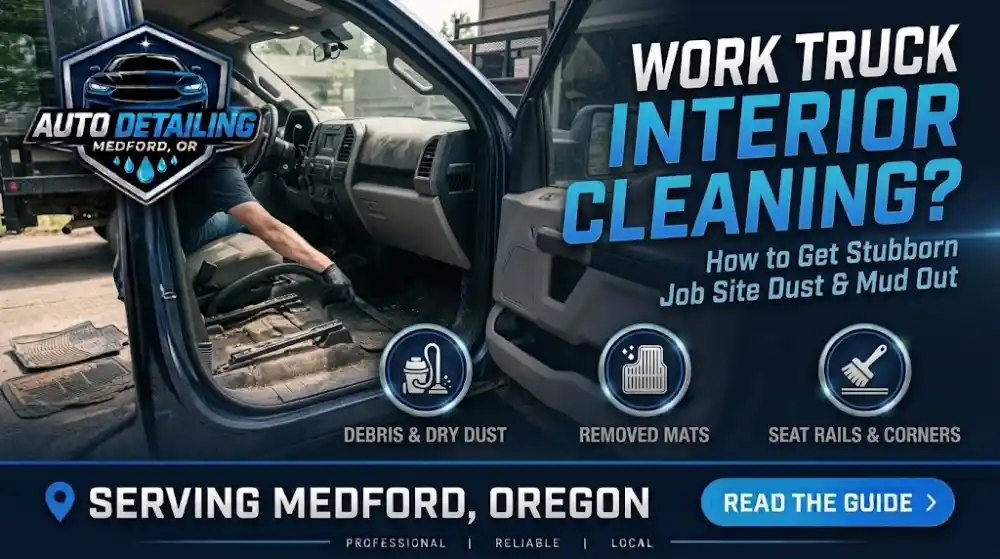
Work truck interior cleaning is not the same job as cleaning a family car. The cab of a truck that spends its days on construction sites, gravel roads and orchard lanes fills with fine dust, mud and grit that a quick vacuum only moves around. Here is where it hides and how to deal with it properly.
Why does a work truck interior get so dirty so fast?
Because every time the door opens, dust and mud come in on boots, gloves, tools and clothes. Fine dust from drywall, concrete or sawdust floats in the air, then settles into carpet fibers, seat seams and vents. Over a few weeks it packs down into a gray layer that a regular vacuum cannot lift.
What You Are Actually Cleaning Up
Not all job site dirt is the same, and the type changes the method.
- Gravel and grit. Sharp bits that scratch plastic and wear down carpet when stepped on.
- Fine dust. Drywall, concrete and sawdust. It is light, it floats, and it clogs filters and vents.
- Mud. Heavy and wet, then dry and crumbly. It stains carpet and sticks in tread patterns on mats.
- Oil and grease. From tools and hands. It leaves dark smears on door handles, steering wheels and seats.
- Orchard and field dust. Common around the Rogue Valley, it is fine, dry and gets everywhere in summer.
Where the Dirt Hides
Most people clean the floor and the dash and stop. These spots hold the most dirt in a work truck:
- Under the floor mats. Grit collects between the mat and the carpet, and wears a hole in both.
- Seat rails and the gap between seats. Crumbs, screws and dust drop in and stay.
- Door sills and the inside edge of the door. Boots drag mud over them every day.
- Vents and the dash seams. Fine dust settles in the louvers and blows out the next time you run the fan.
- Pedals. Mud and gravel stick to the rubber and can make the pedals slick.
- Cab corners and the rear shelf in crew cabs. Tools, hard hats and bags leave dust that no one reaches.
- The cabin air filter. In dusty work, it can clog faster than the schedule says.
Work Truck Interior Cleaning in the Right Order
The order matters more than the products. Work from dry to wet and from top to bottom.
- Empty the cab. Take out tools, bags, loose gear, trash and the floor mats.
- Beat and shake the mats outside. Knock them against a wall or the ground to get the big stuff out first.
- Blow out the dust. Compressed air or a stiff brush loosens dust from vents, seams and rails. Do this before vacuuming, or the dust just lands on a clean floor. Wear a mask.
- Vacuum top to bottom. Start at the dash and seats, finish with the carpet. Use a crevice tool in the seat rails and door pockets.
- Wipe hard surfaces. Use a mild cleaner and a clean cloth on the dash, door panels, steering wheel and handles. Avoid greasy dressing on anything you touch to drive.
- Treat stains and grease. Use a cleaner made for upholstery or carpet and blot, do not scrub. Work from the outside of the mark inward.
- Wash rubber mats. Soap, water and a brush, then dry them fully before putting them back.
- Check the cabin filter. If it is gray and packed, replace it.
What the Rogue Valley Adds to the Mix
Local conditions make a work cab dirtier in predictable ways. Summer brings dry orchard and field dust, plus the gravel lanes around White City and Central Point. Wildfire season can leave ash on every surface and in the cabin filter. Winter flips it, with wet mud tracked in on every boot. That is why work truck interior cleaning here is not a once-a-year job. A truck that goes from dusty to muddy in a few months needs its own routine for each season.
Rubber, Carpet and Vinyl: Different Rules
Rubber mats and liners are the easy ones. They hold mud and wash clean. Deep-tray liners also keep the carpet beneath them clean, which is why many work trucks use them.
Carpet holds dust deep in the fibers. It usually needs extraction, a method that sprays cleaner and pulls it back out with the dirt, to get the base layer clean.
Vinyl and cloth work seats react differently. Vinyl wipes clean fast. Cloth traps dust and oil, so it needs a proper cleaner and enough time to dry.
Mistakes That Make Work Truck Interiors Worse
- Wetting dust first. Dry dust turns into paste if you spray it before vacuuming. Vacuum first.
- Using too much water on carpet. Water you cannot pull back out becomes a musty smell.
- Scrubbing hard on dash plastics. It leaves shiny or scratched patches.
- Skipping the filter. A clogged cabin filter pushes dust back into the cab and makes the AC work harder.
- Dressing the pedals and steering wheel. We explain why in slippery pedals after a car detail.
How Often Does a Work Truck Interior Need Cleaning
It depends on the work, but a rough pattern helps.
|
Habit |
How often |
|---|---|
|
Shake out mats and empty trash |
Weekly |
|
Quick vacuum and wipe |
Every one to two weeks in dusty work |
|
Deeper clean with vents and rails |
Monthly |
|
Extraction and filter check |
Every three to four months, or after a heavy-mud season |
A truck that is wiped down weekly is much easier to deep clean than one that has not been touched in six months.
Small Habits That Keep the Cab Cleaner
- Keep a stiff brush and a small trash bag in the door.
- Knock boots off before climbing in.
- Use deep all-weather floor liners.
- Store tools in a box or bag, not loose on the floor.
- Keep a dedicated towel for dusty hands and tools.
These do not take long, and they cut how much dirt makes it in to begin with.
What Cleaning Cannot Always Fix
Some things stay after a thorough cleaning. Deep oil stains in fabric may fade but not vanish. Worn carpet from years of boots can look clean but still look tired. Cracked seats and torn vinyl are repairs, not cleaning jobs. A good detailer will say so during the first look so you know what to expect.
When to Call a Professional
Good work truck interior cleaning at home goes a long way, but it has limits. If the cab has months of packed dust, set-in stains or a smell that will not go away, extraction and a full interior detail do what a home vacuum cannot. Our Truck Detailing page covers the cab, bed and wheel wells, and our Interior Detailing service covers shampoo extraction on seats and carpet.
If you run more than one truck for your business, our Fleet Detailing page explains how a repeating schedule keeps every cab in the same shape.