How to Compare Auto Detailing Quotes Without Getting Burned
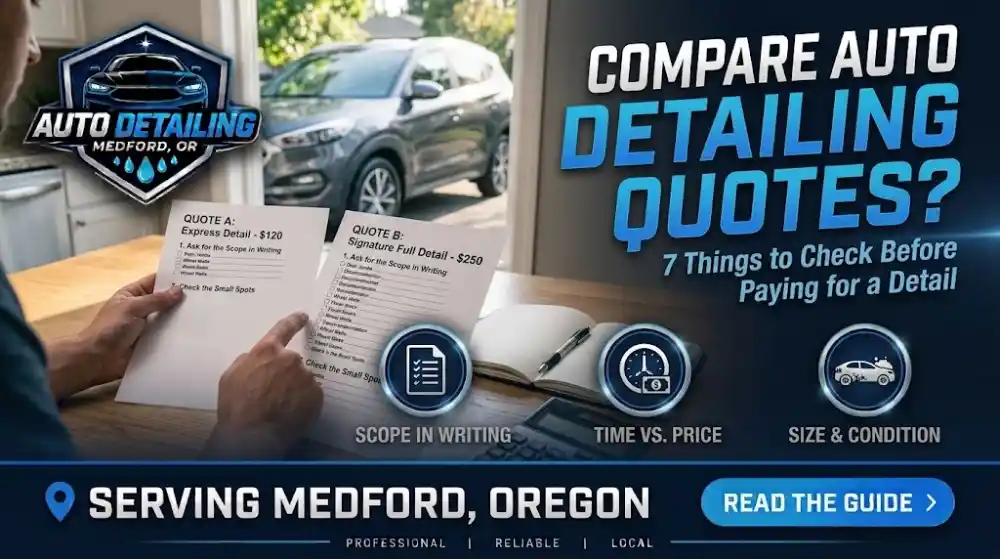
Two detailers can quote the same car at $120 and $250, and both can be honest. The difference is almost always in what the price includes. Knowing how to compare auto detailing quotes means looking past the number and checking what you actually get for it.
Why do detailing quotes vary so much?
Because “a detail” is not one fixed product. One shop may mean a wash, a quick vacuum and a wipe. Another may mean deep seat cleaning, paint decontamination and a protective layer. The label is the same, but the hours of work are not.
1. Ask for the Scope in Writing
A good quote says what will be done. A text or email works fine. It should name the areas covered, not just say “full detail.” Look for:
- Interior: vacuum, seats, carpet, dash, door panels, glass
- Exterior: hand wash, wheels, tires, drying, protection
- Extras: pet hair, stains, odor, headlights, engine bay
If a quote cannot tell you what is included, you cannot compare it with anyone else’s. Even a simple list is better than a single price.
2. Check the Small Spots That Cause Arguments
Many disputes after a detail come from small areas, not the big ones. Ask whether these are included:
- Door jambs and sills
- Wheel wells
- Inside of the windows
- Cup holders, vents and door pockets
- Floor mats, including under the mats
- Trunk or cargo area
A lower price often leaves these out. A higher price may include them. Neither is wrong, but you should know which one you are buying.
3. Match the Time to the Price
Detailing is mostly labor. A deep interior on a family SUV takes hours, and so does a proper hand wash with decontamination. If a quote seems too low for the time the job should take, something is being shortened.
For perspective, our Pricing page shows typical Medford ranges by vehicle size. An express wash sits at the low end. Interior, exterior and full details cost more because they take hours, not minutes. Paint correction and ceramic coating cost more still, because they involve machine work and prep.
4. Look at Vehicle Size and Condition
A fair quote asks about your car. At minimum, you should be asked:
- What type of vehicle it is (compact, SUV, truck)
- How dirty it is inside and out
- If there are stains, pet hair, smoke smell or heavy mud
- When it was last detailed
A shop that quotes a flat price without asking anything is guessing. That price can change on the day, or the work gets cut to fit it. Photos help a lot, since a quick look at the seats and paint tells more than a description.
5. Understand What Is Really Included in “Starting At”
“Starting at $99” sounds clear, but it often means the smallest car in the cleanest condition. Ask what pushes the price up. Common reasons are:
- Larger vehicles, such as crew cab trucks and three-row SUVs
- Heavy pet hair or set-in stains
- Smoke or strong odors
- Mud, sap or tar
- Add-ons like paint correction, ceramic coating or engine bay
A good answer is specific. “It goes up if there is heavy pet hair, which adds about an hour” is clear. “It depends” with nothing else is not.
6. Ask About the Finish and the Products
You do not need a chemistry lesson, but a few questions are fair. What kind of protection goes on the paint, wax or sealant? What finish goes on the interior, matte or glossy? We wrote about why a greasy finish on pedals and mats is a real safety concern in slippery pedals after a car detail.
Also ask whether the shop uses clean towels and a safe washing method. Dirty towels and old brushes are how swirl marks are made.
7. Ask What Happens if You Are Not Happy
Everyone misses a spot sometimes. What matters is how it gets fixed. A good detailer will say up front what happens if you find something at the end. It does not have to be a formal guarantee. A clear, polite answer is enough. If the answer is a shrug, that is useful to know before you book.
Do Not Forget Travel and Setup
If the detailer comes to you, ask whether travel and setup are already in the price. Some include it, some add a small fee, and some charge more for far-out locations. Also ask whether they bring their own water and power, since that can change what they can do at an apartment or a job site. Comparing a mobile quote with a drop-off shop price only works if you count your own time and the trip to drop off and pick up the car.
Warning Signs Worth Noticing
Most detailers are straightforward, but a few signs are worth pausing over.
- A price with no questions. They never asked what the car is or how dirty it is.
- A price that changes on arrival. Without a stated reason, that is a red flag.
- Pressure to add things. A suggestion is fine. A hard push is not.
- Unrelated repair advice. A detailer’s job is cleaning and protection. Mechanical diagnoses or big repair quotes during a detail should make you stop and think.
- Big deposits, no details. A small deposit may be normal. A large one with no scope is not.
- A very low price for a long job. Something is being skipped.
Why Cheap Is Not Always Cheaper
A $60 quote that leaves oily tire shine, a dirty window edge and missed seat tracks may cost you a second visit. A $250 quote that does everything once may cost less over the year. The goal is not the lowest price. It is the right match between your car’s condition and the work done.
On the flip side, higher is not always better. A very high quote for a lightly dirty car may include services you do not need. Our Full Auto Detail page lists what a full detail covers, which helps you tell what is standard from what is extra.
What a Good Quote Conversation Sounds Like
You describe the car and what bothers you. They ask a few questions, maybe request photos, then explain what they would do and why. They give a price or a tight range, say what could change it, and tell you how long it should take. You leave the call knowing exactly what to expect.
Once you know how to compare auto detailing quotes, the conversation gets easy. If you want that kind of call, you can call us from our Contact page and ask any of the questions above.