
Engine Bay Detailing Medford, OR Done Safely
Engine bay detailing in Medford, OR is about more than appearance. It makes it easier to spot a developing leak, worn belt, or corrosion before it turns into a bigger repair, and it matters for resale presentation and pre-sale inspections.
Most drivers only see under the hood when something’s already gone wrong, a warning light, an odd smell, or a mechanic pointing something out during an oil change. A clean engine bay changes that. Dust, oil film, and road grime build up gradually and end up hiding exactly the kind of small issue, a hairline coolant leak, a cracking hose, early corrosion on a battery terminal, that’s far cheaper to catch early than after it fails on the road. See our full auto detailing services in Medford for how this fits with the rest of your vehicle’s care.
Why This Needs a Careful, Specific Process
An engine bay is full of electrical connectors, sensors, and components that aren’t meant to get wet. Spraying it down like a driveway is a common way to cause a check engine light or a no-start condition. We use low-pressure application, cover sensitive components, and use degreasers matched to engine bay surfaces rather than general-purpose cleaners.
What specifically goes wrong with a garden hose or pressure washer approach?
Modern engine bays are dense with connectors, sensors, and control modules that rely on tight electrical seals to function. Direct high-pressure water, especially aimed at the alternator, ECU connectors, or ignition components, can force moisture past those seals. The failure doesn’t always show up immediately either, sometimes a connection corrodes slowly over the following weeks rather than failing on the spot, which makes the cause harder to trace back to a DIY wash days or weeks later.
Our Process
Every step is built around protecting sensitive components while still getting the grime actually off.
Cover or bag sensitive electrical components and the air intake
Apply an engine-safe degreaser and let it dwell on caked-on grime and oil residue
Agitate stubborn areas with brushes sized for tight spaces
Rinse with low pressure, avoiding direct spray into connectors and the alternator
Dress plastic and rubber components for a finished, non-greasy look
Dry and inspect before closing the hood
Why does the degreaser need dwell time instead of an immediate rinse?
Caked-on oil and grime, especially older buildup, needs time for the degreaser to actually break down the residue chemically before it can be safely lifted. Rinsing too early just spreads softened grime around rather than removing it, which is why timing this step correctly matters as much as the product itself.
Why brush before rinsing instead of relying on the degreaser alone?
Some grime, especially where oil residue mixes with road dust into a paste-like buildup around brackets and hard-to-reach areas, needs physical agitation to fully lift, even after a proper dwell time. Brushes sized for tight engine bay spaces reach into those areas without risking damage to hoses, wiring, or connectors the way a stiff-bristled general-purpose brush could.
What to Expect
Years of accumulated dust, oil residue, and grime come off, revealing the actual condition underneath, which sometimes reveals a minor leak or wear spot that was hidden under grime.
We’ll point that out if we see it, since catching it early is worth more than the detail itself.
What should a detailer ask before cleaning my engine bay? They should ask whether you want it cleaned at all, and tell you how. A careful detail covers sensitive parts, uses low water, and dresses plastic lightly. If you say no, nothing should be touched or pressure washed.
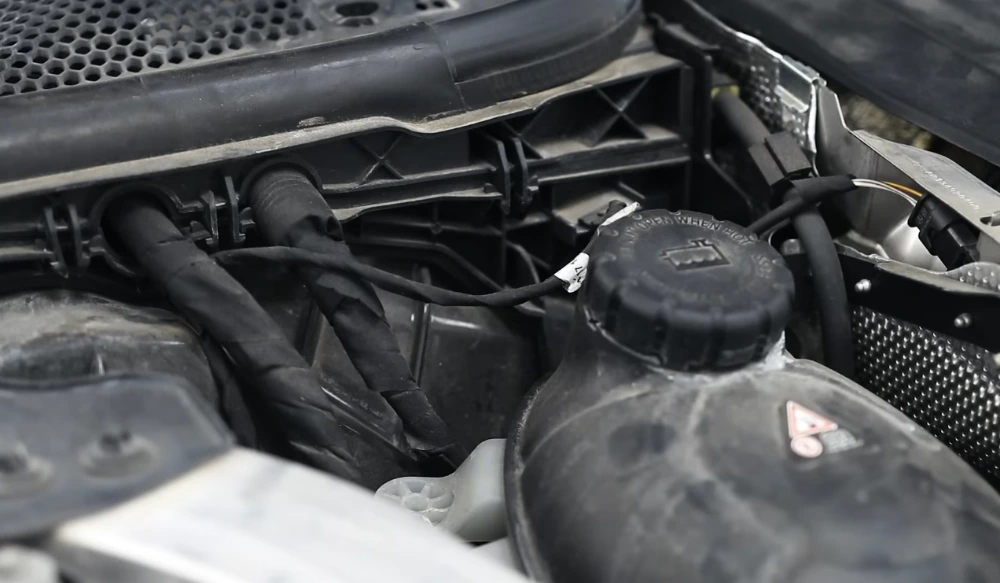
What kinds of issues actually get caught this way?
The most common finds are small coolant or oil seepage around gaskets and hose connections, corrosion starting on battery terminals, and cracking or fraying on rubber hoses and belts that grime had been masking. None of this is a formal mechanical inspection, we’re not replacing a certified pre-purchase inspection, but a visibly cleaner engine bay makes these early warning signs far easier to notice than when everything is coated in a uniform layer of dust and oil film.
Pricing
See our full Pricing page for current engine bay detailing rates.
Why does pricing vary between vehicles?
An engine bay with years of accumulated grime and oil residue takes longer to safely degrease and agitate than one that’s been cleaned more recently. Vehicle layout also matters, some engine bays have more exposed components requiring careful covering than others, which affects prep time.