Odor Removal Medford, OR That Solves the Source
Odor removal in Medford, OR treats the source, not just the smell an air freshener covers for a few hours. This service treats the actual source, whether that’s smoke, pet odor, or mildew, so the smell doesn’t come back once the fragrance fades.
Odor is one of the few interior problems you can’t see coming from a glance inside the car, which is exactly why it’s easy to underestimate. A vehicle can look completely clean and still carry a smoke or mildew smell that gets stronger the moment the heater or air conditioning kicks on, since that airflow pulls trapped odor straight out of the vents and into the cabin. Masking it with a fragrance tree only adds a second smell on top of the first one, it doesn’t remove anything. See our full auto detailing services in Medford for how this fits with the rest of your vehicle’s care.
Why Odors Are Harder to Remove Than They Look
Odor-causing particles don’t just sit on the surface; they settle into carpet padding, seat foam, and the vehicle’s HVAC system. That’s why a car can smell clean immediately after a wipe-down and then smell exactly the same a day later once the air conditioning runs again. Effective odor removal has to address all of those areas, not just the visible surfaces.
Why does the smell come back specifically when the AC or heater runs?
A car’s HVAC system continuously pulls cabin air through the same ducts and evaporator core. If odor-causing particles have settled in that system, every cycle of the fan pushes them back into the air you’re breathing, regardless of how clean the visible surfaces look. This is also why a quick surface wipe-down or a fragrance spray only ever provides temporary relief, it never touches the part of the system actually recirculating the smell.
Common Sources We Treat
Different odor sources need different treatment approaches, since what works on smoke won’t necessarily work on mildew.
Smoke odor
One of the most persistent, since smoke particles settle deep into fabric and the HVAC system. Vehicles that sat through a Rogue Valley wildfire smoke season often carry this even without anyone smoking in the car.
Pet odor
Comes from accumulated dander, saliva, and accidents that soak into carpet padding, not just the visible surface. If embedded pet hair is part of the issue too, our Pet Hair Removal service addresses that specifically.
Mildew and mold
Usually from a slow leak, spilled liquid, or damp items left in the car, which needs the moisture source addressed as well as the odor itself.
Food and spill odors
Spilled milk, forgotten takeout, and similar spills that seep below the surface.
New car and off-gassing odors
Not every odor concern is unpleasant, some customers want strong new-car or chemical smells reduced, often after an interior repair or a recent detail using heavily scented products. This is treated with the same source-focused approach, addressing what’s actually in the fabric and air system rather than trying to cover one strong smell with another.
How do you figure out which treatment a specific odor needs?
Inspection comes first, every time. We identify whether the source is organic (pet, food, mildew) or particulate (smoke, off-gassing), check for any related moisture that needs addressing separately, and confirm whether the HVAC system itself is involved before choosing between enzyme treatment and ozone treatment.
Our Process
Treating odor at the source, rather than masking it, takes a specific sequence of steps.
Identify the odor source and any related moisture or spill damage
Deep clean and extract affected carpet, padding, and upholstery
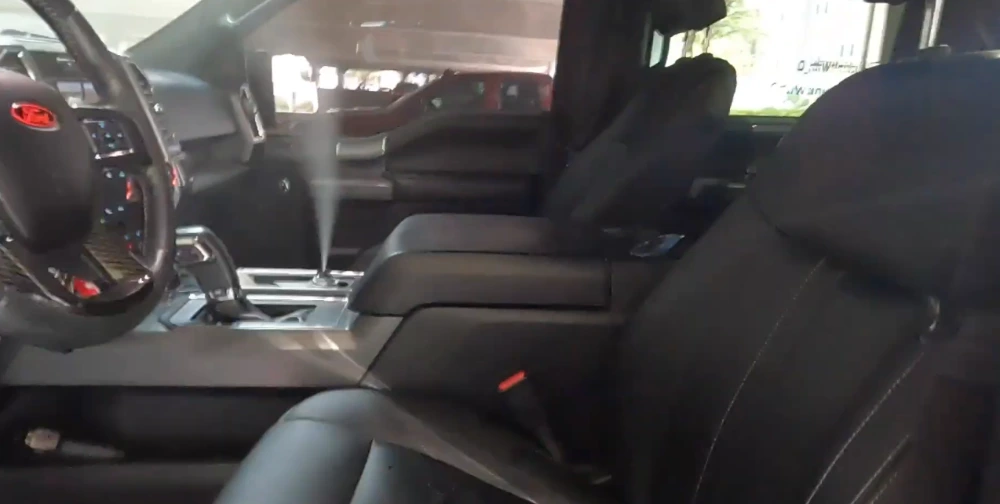
Treat with enzyme-based or ozone treatment, matched to the odor source, rather than a generic fragrance spray
Address the HVAC system if smoke or mildew has settled into it
Follow-up inspection to confirm the odor is gone, not just masked
Pricing
See our full Pricing page for odor removal rates, typically priced as an add-on to interior detailing based on severity.
Why is odor removal priced by severity rather than a flat rate?
A mild, recent food spill takes far less time to treat than months of accumulated smoke exposure that’s settled into both the fabric and the HVAC system. Severity is assessed during inspection, before any work starts, so the quote reflects the actual treatment needed rather than a one-size-fits-all number.