
Headlight Restoration Medford, OR for Night Safety
Headlight restoration in Medford, OR fixes more than a cosmetic problem. They measurably reduce how far your headlights project light at night, which matters most on unlit stretches of road around White City and Eagle Point.
Cloudy headlights are easy to put off because they don’t affect how a car drives during the day. The real cost shows up after dark, on the drive home from Ashland along unlit rural stretches, or turning onto a side road off Highway 62 with no streetlights. A hazy lens doesn’t just look dated, it physically scatters light instead of projecting it forward in a usable beam, which is a real, measurable safety gap, not just a cosmetic one. See our full auto detailing services in Medford for how this fits with the rest of your vehicle’s care.
Why Headlights Turn Yellow and Cloudy?
Modern headlight lenses are plastic, not glass, and coated with a clear UV-protective layer. Years of sun exposure break that coating down, letting UV rays yellow and oxidize the plastic underneath. Once that protective layer is gone, the plastic degrades faster, which is why the problem tends to accelerate once it starts.
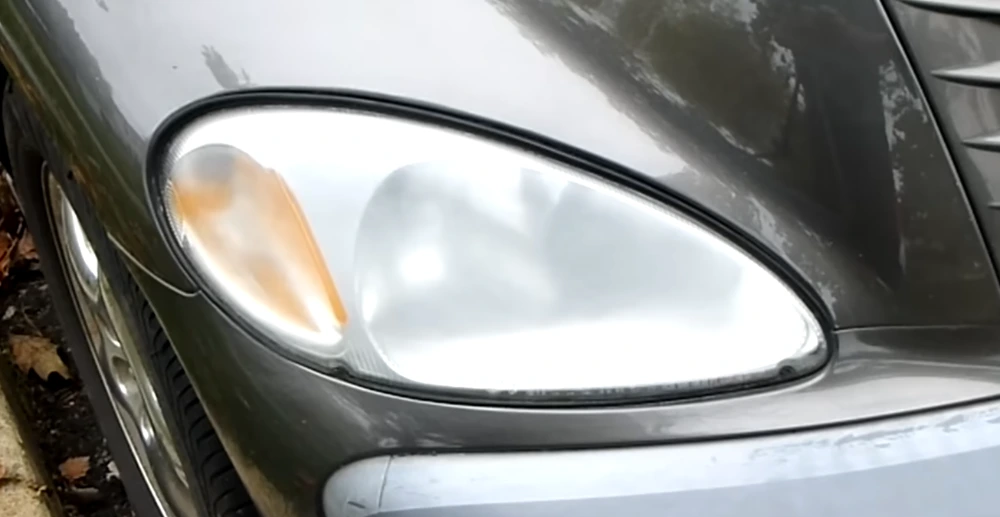
BEFORE
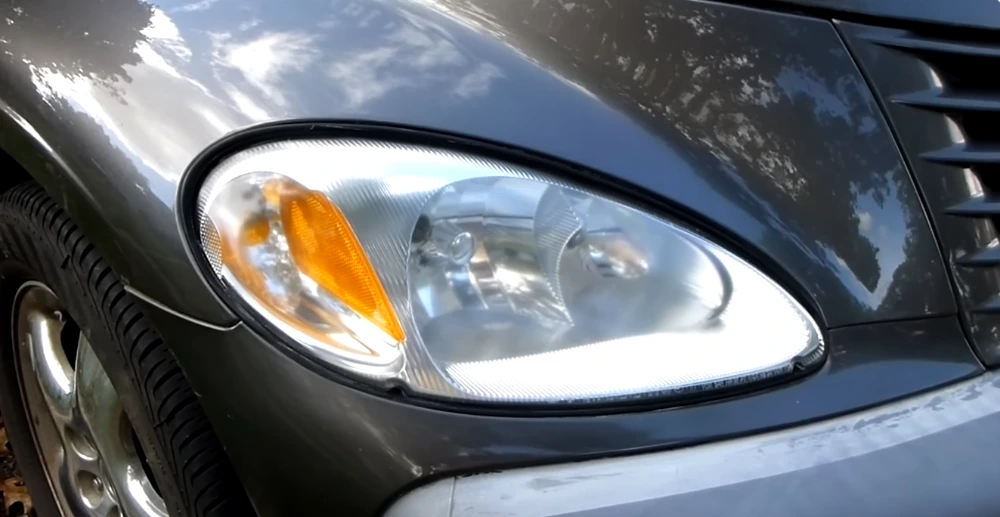
AFTER
Why does Medford’s climate make this happen faster than in other regions?
Long, dry summers mean sustained, direct UV exposure for vehicles parked outdoors, which is exactly the condition that breaks down a headlight’s protective coating fastest. Vehicles garaged overnight or parked in shade tend to hold their clarity noticeably longer than those parked in direct sun daily, which is worth factoring in if you’re deciding when to book this service.
Why does the process speed up once it starts, instead of staying gradual?
Once the UV coating fails, the exposed plastic underneath oxidizes directly, and that oxidized layer scatters more UV onto the layer beneath it, compounding the damage. This is why a headlight that looked only slightly hazy six months ago can look significantly worse now, the degradation isn’t linear, it accelerates.
Our Restoration Process
Restoring clarity takes a specific sequence of steps, not just a quick polish over the cloudy layer.
Tape off surrounding paint and trim to protect it during the process
Wet sand the lens in progressive grits to remove oxidized plastic and surface damage
Machine polish to restore clarity and gloss
Apply a UV-protective sealant to slow future yellowing
Why is wet sanding necessary instead of just polishing?
Polishing alone only affects the very top layer of the plastic. If the oxidation has set into the surface, which it usually has by the time a headlight looks visibly yellow or cloudy, sanding in progressive grits is what actually removes that damaged layer. Skipping straight to polishing on a headlight that needs sanding first usually produces a temporary improvement that fades within weeks, rather than a real, lasting result.
Why does the sealant step matter as much as the sanding and polishing?
Without a new UV-protective layer, the freshly restored plastic is exposed to the same UV rays that caused the original damage, with no protection at all. The sealant is what actually slows the clock on the process starting over; skipping it means a faster return to cloudy and yellowed lenses than if it’s applied.
What Restoration Can and Cannot Fix?
Restoration removes surface oxidation and yellowing effectively in the large majority of cases. Headlights with deep cracks, moisture inside the housing, or failing internal components need replacement rather than restoration, and we’ll tell you if that’s what your vehicle needs during inspection.
How can I tell if my headlight needs restoration or replacement?
A hazy, yellowed, or chalky-looking lens that’s otherwise intact is almost always a restoration case. Visible cracks, fogging, or water droplets inside the lens itself, or a headlight that’s noticeably dimmer than its opposite side even when clean, are signs of a deeper issue that restoration won’t resolve, and we’ll flag this plainly during inspection rather than restoring a lens that won’t hold results.
How Long Does Restoration Last?
With the UV sealant applied, results typically hold for one to two years before any noticeable yellowing returns, depending on how much direct sun the vehicle gets during daily parking.
Does anything extend how long the results last?
Garaging the vehicle when possible, or parking in shade rather than direct sun, meaningfully slows the return of UV damage. Vehicles that spend most of their time parked outdoors in full sun will generally see results fade toward the shorter end of that one-to-two-year range.
Pricing
See our full Pricing page for current headlight restoration rates, typically priced per pair.