How to Remove Pet Hair from Car Seats at Home
If you want to remove pet hair from car seats, the trick is not more suction. It is loosening the hair first so it comes up in clumps instead of staying hooked in the weave. A few cheap tools and the right order will do most of the work.
What is the fastest way to remove pet hair from car seats?
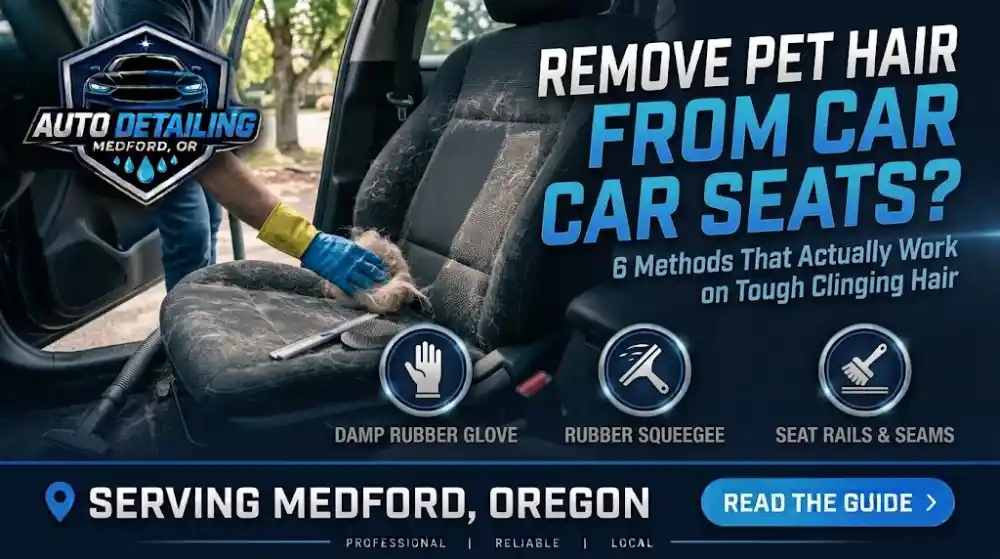
Pull a rubber glove or a rubber squeegee across the seat in one direction. The rubber grabs the hair and rolls it into a pile you can pick up or vacuum. It works on most cloth seats in minutes and costs almost nothing.
Why Hair Clings to Seat Fabric
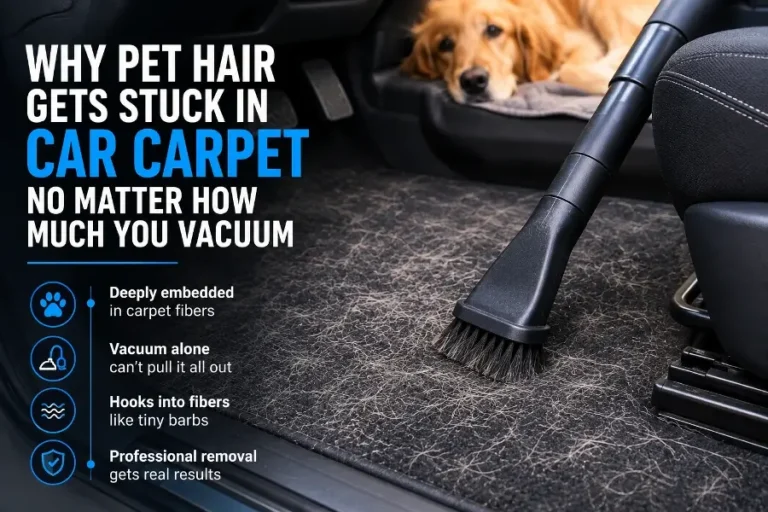
Pet hair is not smooth. Under a microscope, each strand has tiny scales, and dog and cat undercoat hair has a slight barb. When a pet lies on the seat and shifts around, the hair gets pressed sideways into the weave and locks in. Suction pulls straight up, which is the wrong direction to free a strand that is hooked sideways. That is why a car can look vacuumed and still feel furry when you run a hand across the seat.
Six Methods That Work
Try them in this order, from easiest to most hands-on.
1. Damp rubber glove. Put on a clean rubber dish glove, lightly dampen it, and drag it across the seat in short strokes. Hair clumps up as you go.
2. Rubber squeegee or pet hair brush. A window squeegee or a rubber-bristled pet brush does the same job over a larger area. Use short, firm pulls toward you.
3. Vacuum with a rubber-tipped or brush attachment. Once the hair is loosened and gathered, the vacuum picks it up easily. A crevice tool handles seams and the seat-to-seat gap.
4. Lint roller or sticky tape. Good for finishing fine hair on smooth surfaces. It is slow on big areas and clogs quickly, so use it for touch-ups only.
5. Compressed air or a stiff brush. Blow or brush hair out of stitching and piping, then vacuum it up.
6. A fabric-safe cleaner and extraction. For heavily embedded hair, stains or dander, deeper cleaning pulls out what is left deep in the fibers. This is the step that usually needs a professional machine.
A Full Seat Pass, Step by Step
Here is how to put the methods together on one seat, so nothing gets missed.
- Move the seat all the way forward, then all the way back, so you can reach the rails and the gap behind it.
- Loosen first. Drag the damp glove or squeegee from the top of the seat back down to the cushion, then across the bottom, working in one direction.
- Gather the piles. Lift the clumps by hand or with the vacuum. Do not brush them back into the seat.
- Work the seams. Use the crevice tool or a stiff brush along stitching, piping and the crack between the back and the cushion.
- Do the headrest and sides. Hair collects on the bolsters where the pet rested its head.
- Vacuum once more, then run your bare hand over the seat. If you feel hair, repeat the glove pass.
- Let it dry with the doors open if you used a damp tool.
Do one seat at a time, so loose hair does not fall onto a seat you already finished.
What Works Best on Each Seat Type
|
Seat type |
Best approach |
Careful with |
|
Cloth |
Damp rubber glove, then vacuum |
Over-wetting, which can leave rings |
|
Microfiber or suede-style |
Soft brush in one direction, vacuum |
Rubbing hard, which can mat the fibers |
|
Leather |
Wipe with a soft damp cloth, vacuum seams |
Sharp tools and harsh cleaners |
|
Vinyl |
Wipe and vacuum |
Strong solvents that dry it out |
Leather and vinyl hold less hair, since there is no weave. Hair usually stays in the seams and stitching, so the crevice tool does most of the work.
What to Skip When You Remove Pet Hair from Car Seats
Some popular tricks do more harm than good.
- Pumice stones. They can tear fabric and leave bare patches.
- Sticky tape on delicate fabric. It can lift fibers or leave residue.
- Heavy water. Too much moisture soaks into the foam and leads to smell.
- Dryer sheets and fabric softener sprays. They leave a film and are not made for car upholstery.
- Scraping with a blade or sharp tool. It tears seat covering.
Dog Scratches and Claw Marks
Hair is only part of what pets leave behind. Claws can scratch leather and snag cloth. Light scuffs on leather can often be softened with a gentle cleaner and conditioner. Deep cuts and pulled threads are damage to the material and will not vanish with cleaning. A seat cover or a hammock-style protector is the best way to prevent it.
Local Pet Hair Problems in the Rogue Valley
A few things make pet hair worse in Medford.
- Shedding seasons. Many dogs blow their coat in spring and fall, and the seat fills up fast.
- Trails and grass. After a walk along the Bear Creek Greenway or Prescott Park trails, dogs bring in dirt, burrs and, in summer, foxtail grass seeds that hook into fur and fabric. Check your dog and the seats before you drive home, since those seeds work their way into cloth.
- Dry summer air. Static makes hair cling harder to fabric, so a lightly damp tool helps.
How to Keep Hair Off the Seats Next Time
Cleaning gets easier if less hair lands there.
- Brush your dog before car rides, ideally outside.
- Use a seat cover or hammock and wash it regularly.
- Keep a rubber squeegee or pet brush in the car for quick passes.
- Do a five-minute pass weekly during heavy shedding.
- Wipe pet paws before they climb in on muddy days.
How Long It Takes and What to Expect
A front seat with light shedding takes about ten minutes with the glove method. A back bench with a heavy shedder can take half an hour. If you get most of the hair off but a fine layer stays woven into the fabric, that is normal. Hair that has been pressed in for months bonds to the fibers, and you may never lift all of it with home tools. When you reach that point, the question to ask is whether it is worth your time to keep going, or whether extraction is a better use of the afternoon.
When Hair Keeps Coming Back
If you clean and the seat is still furry in a day, the hair is likely deep in the foam seams or carpet below. If a smell comes with it, dander and oils are part of the problem. That is when a professional extraction makes the difference. Our Pet Hair Removal page explains how embedded hair is loosened and extracted, and why it works better than vacuuming alone. We also explain the mechanism in why pet hair gets stuck in car carpet.
If you have a pet smell on top of the hair, our Odor Removal page covers how odor is treated at the source, and our Interior Detailing service includes seat and carpet shampooing.