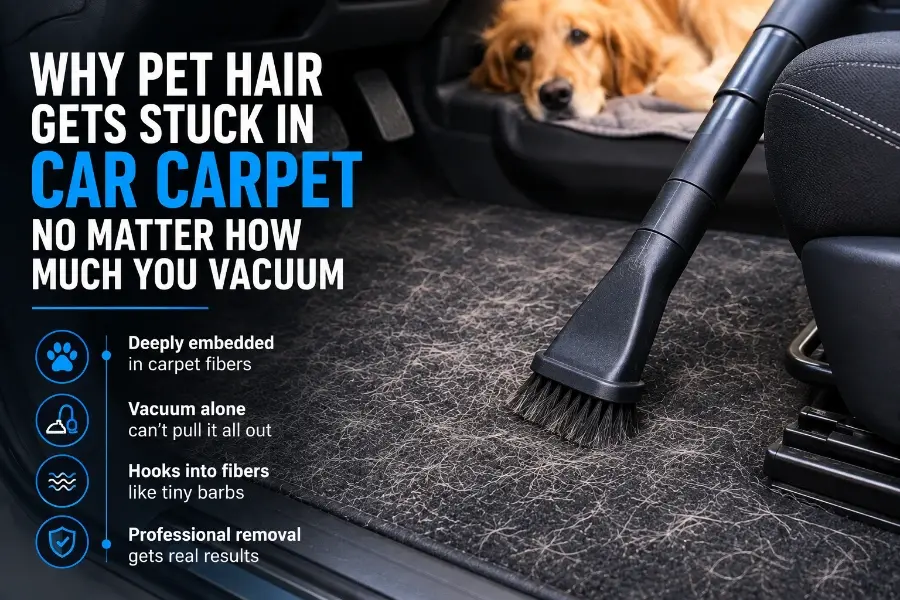
Why Pet Hair Gets Stuck in Car Carpet No Matter How Much You Vacuum
You vacuum the car. It looks better. Then a passenger sits down, or you run your hand across the seat, and there it is again. Pet hair stuck in car carpet, still there, like the vacuum barely touched it.
If you drive with a dog or cat regularly, you already know this feeling. It is not that you are vacuuming wrong. Pet hair behaves differently than dust or crumbs, and a regular vacuum was never really built to deal with it.
Here is why it happens, and what it actually takes to get it out.
Why Pet Hair Stuck in Car Carpet Isn’t Like Other Dirt
Most of what a vacuum picks up easily, dust, dirt, small crumbs, sits loosely on top of carpet and fabric. A vacuum’s suction pulls straight up, which works fine for anything just resting on the surface.
Pet hair is different. Individual hairs, especially from dogs with a thick undercoat, have a slight barb or scale structure along their length. Under a microscope, this looks a little like the hook side of velcro. When that hair lands in carpet fiber or fabric weave, those tiny barbs catch and hold on, almost like the hair is stitching itself into place.
A vacuum pulling straight up does not do much against that kind of grip. It can grab hair that is loose on the surface, but it usually leaves behind the hair that has worked its way down and hooked into the fibers underneath. This is the core reason pet hair stuck in car carpet resists a normal vacuum pass.
Why It Seems Worse in a Car Than at Home
Carpet at home is usually looser and has bigger gaps between fibers. Car carpet and car seat fabric tend to be woven tighter, which actually gives pet hair even more places to hook into. Add in the vibration from driving and the pressure of people sitting on the seats, and hair gets pressed further down into the material over time, not lifted up and out.
This is part of why a car can seem to hold onto pet hair far longer than a couch or a rug does, even with regular vacuuming.
Why a Stronger Vacuum Doesn’t Fully Solve It
It is a reasonable guess that a more powerful vacuum would fix this. More suction should mean more hair removed, right? Only up to a point.
Suction strength affects how hard a vacuum pulls in one direction, straight up and out. It does not change the angle of pull or add any side to side motion. Since pet hair is caught sideways in the weave of the fabric, not just sitting on top, a stronger vacuum still cannot get underneath and dislodge it the way a brushing or agitating motion can.
This is why even a genuinely powerful shop vacuum often leaves a surprising amount of pet hair behind, especially in carpet.
Where Pet Hair Stuck in Car Carpet Builds Up the Most
A few spots tend to hold far more hair than the rest of the cabin, and they are easy to miss during a quick cleanup.
1. Seat seams
The stitched lines where two pieces of fabric meet trap noticeably more hair than the flat part of the seat.
2. Around and under seat tracks
Hair works its way down into the narrow gap between the bottom of the seat and the floor, an area a vacuum nozzle usually cannot reach at all.
3. Cargo area and trunk liner
If your pet rides in the back of an SUV or hatchback, this area often ends up with the heaviest buildup in the whole vehicle.
4. Door pockets and lower door panels
Hair gets brushed off during getting in and out and quietly collects here over time, even without the pet ever touching the door directly.
What Actually Helps Get Pet Hair Out
A few tools and techniques work with the hooked shape of pet hair instead of just relying on suction alone.
Why Fabric Conditioning Matters Afterward
Tools that are aggressive enough to dislodge stubborn pet hair can also be a little rough on fabric and carpet if nothing follows afterward. This is why a proper pet hair removal process usually includes a conditioning step at the end, whether the surface is fabric or leather, to help offset the wear from the agitation and keep the material in good shape over repeated cleanings.
How Often Should You Deal With This
If a pet rides in your car regularly, doing a real pet hair removal pass every two to three months keeps most vehicles from building up a heavy layer. A single pet that sheds lightly might go a bit longer between sessions. Multiple pets, or a heavy shedding breed, may need it a little more often.
Waiting too long between sessions does not make the job easier later. If anything, hair that has had more time to settle and get pressed into the fibers by regular use tends to take longer to fully remove than hair that gets addressed on a more regular schedule.
The Bottom Line
Pet hair stuck in car carpet after a vacuum is not a sign you are doing something wrong. It is just how pet hair behaves once it works its way into carpet and fabric. Getting it out for real takes tools built to loosen that hooked grip, not just stronger suction.
If your car has pet hair that will not come out no matter how much you vacuum, our Pet Hair Removal service is built specifically for this problem, reaching the seams, seat tracks, and cargo areas a home vacuum usually misses. It also pairs well with a full Interior Detailing service if the rest of the cabin could use attention at the same time.Visit our homepage to see the full range of auto detailing services we offer in Medford.