Car Wash vs Car Detailing: What a $10 Wash Actually Gets You
Car wash vs car detailing can look like one problem at two price points. Both leave your car cleaner than it was. Both take less than an hour of your day. But underneath that similarity, they are really doing two very different jobs, and knowing the difference helps you spend your money on the right one for what your car actually needs.
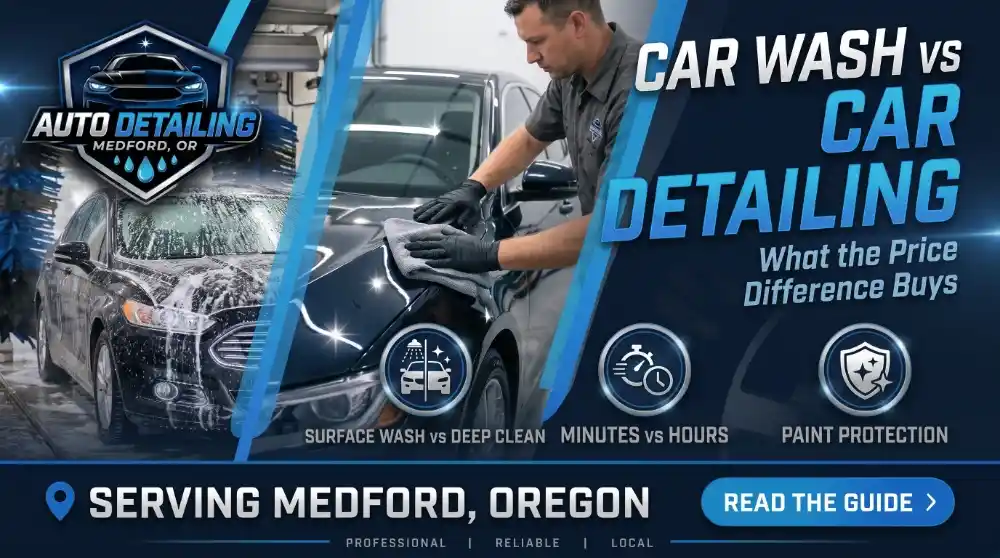
Built for speed & volume. Removes loose surface dust in minutes.
Built for thoroughness. Decontaminates paint, deep cleans interior, & adds UV protection.
Use a wash for routine upkeep; use a detail for deep cleaning & paint preservation.
Is a cheap car wash just a smaller version of a full detail? Not really. It is closer to a different category of service entirely, built to solve a different problem.
What a Basic Car Wash Is Actually Built to Do
A basic drive-through or self-serve wash exists to remove loose surface dirt quickly and cheaply. It is built around speed and volume, getting as many cars through as possible while still leaving each one visibly cleaner than when it arrived.
This is genuinely useful for what it is. If your car has a normal layer of everyday dust and road film, a quick wash handles that well. The problem is what it is not built to do, which is where a lot of people end up disappointed if they expect wash-level pricing to deliver detail-level results.
What a Basic Wash Does Not Address
A quick wash typically skips or only lightly touches several things that actually affect how a car looks and holds up over time.
- Bonded contamination: brake dust and tree sap, which needs a clay bar treatment to actually lift off
- Interior deep cleaning: usually limited to a quick vacuum at best, with no carpet or seat shampoo
- Wheel wells and undercarriage: areas often skipped entirely
- Paint correction: no treatment for existing swirl marks or oxidation
- Long-term protection: skips protective layers like sealant, wax, or ceramic coating
None of this is a criticism of a basic wash. It was never designed to do these things. The issue only comes up when someone expects a full detail’s results from a service built for a completely different purpose.
What a Full Detail Is Actually Built to Do
A full detail is built around thoroughness rather than speed. It combines a proper decontamination wash, deep interior cleaning with extraction, wheel and wheel well attention, and a protective step at the end, all done as one complete process on a single vehicle rather than a quick pass through a tunnel.
This naturally takes longer, usually a few hours rather than a few minutes, and costs more, since it involves real labor and specific products matched to different surfaces rather than one general wash solution used everywhere.
Car Wash vs Car Detailing Side by Side
Seeing both services listed out side by side makes the difference clearer than describing them separately ever could. The table below shows exactly where a basic wash stops and where a full detail picks up.
| What’s Included | Basic Wash | Full Detail |
|---|---|---|
| Surface dirt removal | Yes | Yes |
| Bonded contamination (clay bar) | No | Yes |
| Interior vacuum | Sometimes, basic | Yes, thorough |
| Carpet and seat shampoo | No | Yes |
| Wheel wells and undercarriage | Rarely | Yes |
| Paint protection (sealant or wax) | Rarely, if ever | Yes |
| Typical time | Minutes | A few hours |
Why This Isn’t Really About One Being “Better”
Does this mean a full detail is always the smarter choice? Not necessarily. If your car just needs a quick refresh between deeper cleans, paying full detail pricing for that is not a good use of money. The two services exist for different situations, not as a cheap option and an expensive option doing the same job.
A basic wash makes sense for routine upkeep on a car that is already in reasonably good condition. A full detail makes sense when a car has gone longer without real attention, needs interior work beyond a vacuum, or has exterior contamination that a regular wash cannot touch.
Why the Price Difference Makes Sense Once You See What’s Behind It
The gap in price between a basic wash and a full detail is not really about one place charging more for the same work. It reflects a genuinely different amount of time, labor, and product cost. A tunnel wash processes a car in minutes with automated equipment. A full detail involves a person spending real hours working through a specific sequence of steps by hand, using products chosen for each individual surface rather than one general solution.
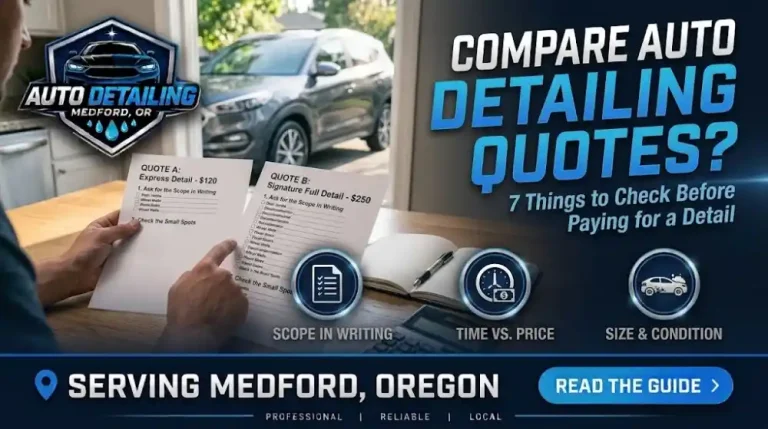
Once you see the actual list of what each service includes, the price difference stops looking like a markup and starts looking like what it actually is, a reflection of how much more work goes into one versus the other. If you are weighing quotes from different detailers, our guide on how to compare auto detailing quotes shows what to check.
Where a Cheap Wash Can Cost You More Later
A quick wash feels like the cheaper choice, but a few things can make it more expensive over time.
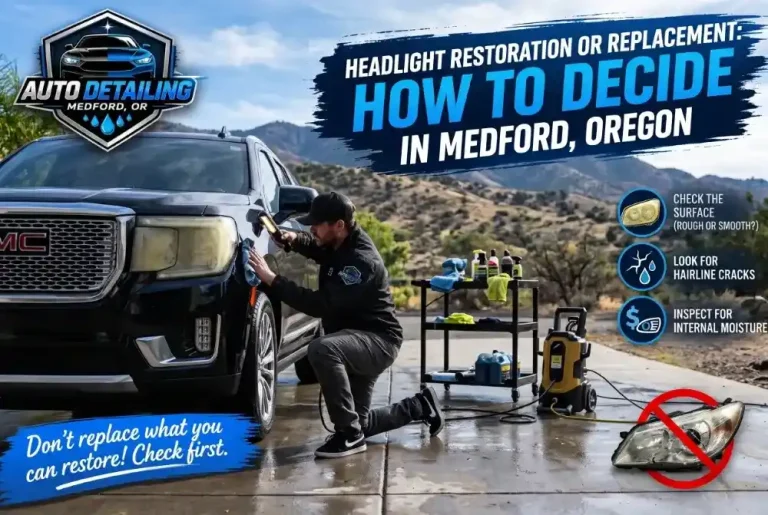
Brushes and cloths can leave fine scratches. Some automatic washes use brushes or cloth strips that carry grit from the car before yours. Dragged across clear coat, that grit leaves the thin, web-like swirl marks you see in sunlight, especially on dark paint. We explain how that happens in why automatic car washes cause swirl marks.
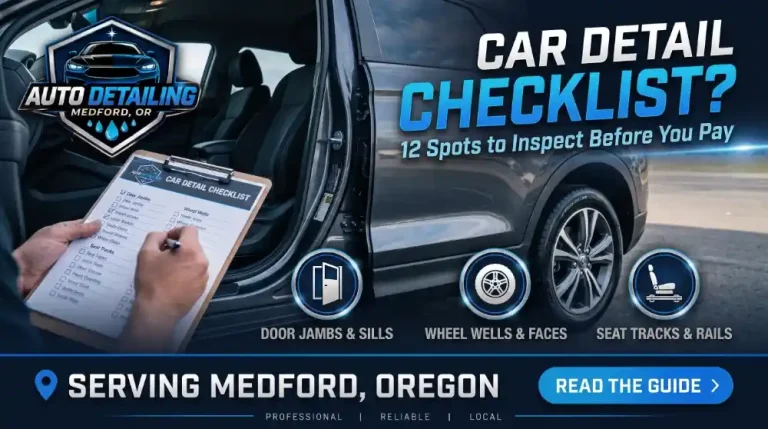
The small spots stay dirty. Door jambs, wheel wells and window edges are usually skipped in a fast pass. That is where the grease on your sleeve and the grit near the sills come from.
Nothing protects the paint afterward. Without wax or sealant, dust, tree sap and brake dust bond to the surface faster, and each wash has more to fight.
None of this makes a quick wash a bad idea. It means it works best as upkeep on a car that is already in decent shape, not as a substitute for a deeper clean.
How to Decide Which One Your Car Needs Right Now
A few honest questions help point toward the right choice for right now, rather than defaulting to whichever one you got last time.
- Has it been under a month since the car’s last real cleaning, with only light everyday dust since? A basic wash is probably enough.
- Does the paint feel rough or gritty to the touch, a sign of bonded contamination? That needs more than a wash can offer.
- Has the interior gone without a deep clean for several months, with visible stains, odor, or embedded pet hair? That calls for real interior work, not just a vacuum.
- Are you preparing to sell the car or trying to protect it long term? A full detail with the right protective step makes more sense than routine upkeep alone.
Can You Use Both, and Does That Make Sense
Plenty of people use both services, just for different purposes. A full detail every few months to handle deep cleaning and protection, with a basic wash or a quicker express service in between to maintain that baseline without paying full detail pricing every single time. This combination tends to keep a car looking consistently good without either overspending on routine upkeep or letting buildup accumulate to the point where it needs correction work.
What This Comparison Really Comes Down To
A basic wash and a full detail are not competing for the same job. One is fast, cheap, routine upkeep. The other is a thorough, deeper process meant to actually clean, protect, and sometimes correct a vehicle rather than just refresh its surface. Understanding car wash vs car detailing, and which one your car actually needs, rather than assuming they are interchangeable at different price points, is what actually gets you the result you are looking for.
If your car needs real interior work, exterior decontamination, or long-term protection, our Full Auto Detail service covers all of it in one appointment. If you just need routine upkeep between deeper cleans, our Express Detail service is built for exactly that.