
Ceramic Coating Medford, OR for Years of Protection
Ceramic coating in Medford, OR gives your car’s paint a hard, glass-like layer that resists Oregon sun, tree sap, and road grime for years, not weeks. Here’s what it actually does, what it costs, and whether it’s the right call for your vehicle.
What Ceramic Coating Actually Does
Ceramic coating is a liquid polymer that chemically bonds to your vehicle’s clear coat, rather than sitting on top of it the way wax does. Once cured, it creates a hard, hydrophobic layer that changes how the paint interacts with everything around it.
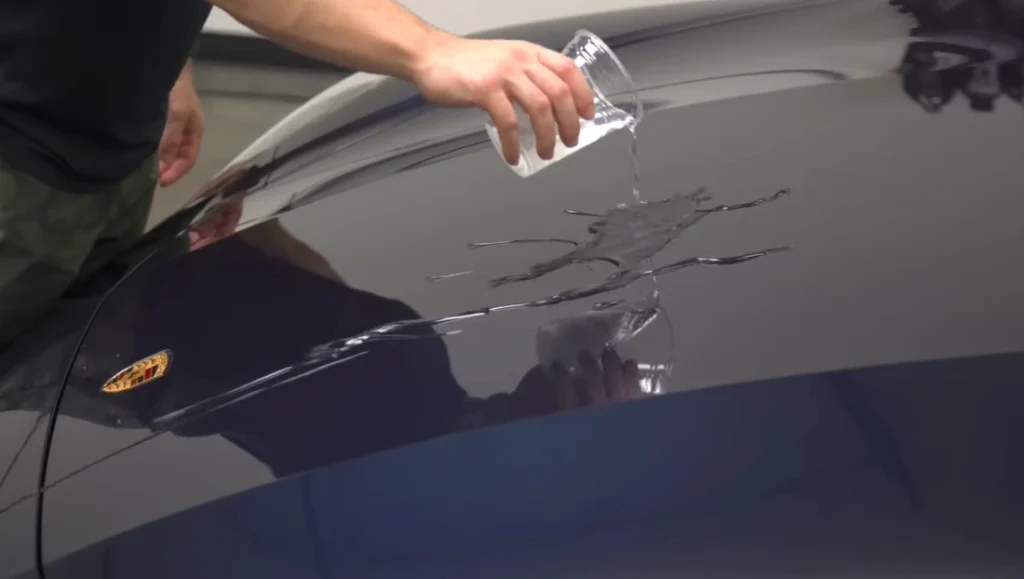
In practical terms, that means water beads up and rolls off instead of drying into spots. Dirt and road film have a much harder time bonding to the surface, so routine washing takes less time and effort.
UV rays, which fade and dull paint over a Medford summer, are blocked more effectively than wax allows. Bird droppings, tree sap from the oaks near Bear Creek Greenway, and bug residue from highway driving on I-5 wipe off far more easily before they have a chance to etch into the clear coat.
It does not make paint scratch-proof, and it will not fix existing swirl marks or oxidation. If your paint already shows damage, that needs to be addressed with paint correction first; coating over damaged paint just seals the damage in rather than fixing it.
| Feature | Wax | Paint Sealant | Ceramic Coating |
|---|---|---|---|
| Protection | Light protection with added gloss. | Better protection than wax using synthetic polymers. | Highest level of protection against UV rays, chemicals, and environmental contaminants. |
| Durability | Typically lasts 4–8 weeks. | Typically lasts 3–6 months. | Typically lasts 1–5 years, depending on the coating and maintenance. |
| UV Resistance | Basic. | Good. | Excellent. |
| Chemical Resistance | Limited. | Better than wax. | Excellent resistance to chemical stains and contaminants. |
| Maintenance | Requires frequent reapplication. | Needs reapplication every few months. | Requires proper washing and maintenance but far less frequent reapplication. |
| Preparation Time | Minimal. | Moderate. | Extensive paint preparation is recommended before application. |
| Cost | Lowest. | Moderate. | Highest upfront cost but longest-lasting value. |
| Best For | Drivers wanting an inexpensive shine for a short period. | Owners looking for longer-lasting protection without the cost of ceramic coating. | Long-term paint protection with maximum durability and easier maintenance. |
Ceramic coating requires paint decontamination and often light correction before application, and it costs more upfront than a wax job. For a vehicle you plan to keep more than a year or two, that upfront cost is usually offset by not paying for repeated wax applications and by better long-term protection for the paint underneath.
Our Ceramic Coating Process
Coating only performs as promised when the paint underneath is properly prepared first. Here’s the full sequence we follow.
Full inspection. We check the paint under proper lighting for swirl marks, oxidation, and existing damage, since coating needs to go over sound paint to actually protect it.
Decontamination wash. A pH-neutral hand wash followed by iron decontamination and a clay bar treatment removes bonded contaminants that a regular wash leaves behind.
Paint correction, if needed. If the inspection shows swirl marks or oxidation, we recommend single-stage or multi-stage correction before coating. We won’t coat over damage that correction could have fixed, since that locks the problem in rather than solving it.
Coating application. The ceramic product is applied in controlled sections and leveled by hand, then given time to flash and bond before the next layer.
Cure time. Most coatings need [24 to 48 hours, product-dependent] away from rain and dust to fully cure. We’ll tell you exactly how long to wait before the first wash.
What’s Included?
Every ceramic coating package begins with a thorough hand wash, paint decontamination, and surface preparation to ensure the coating bonds properly. If your vehicle needs additional paint correction to remove swirl marks, oxidation, or light scratches, we’ll inspect the paint first, explain your options, and provide an updated quote before any additional work begins.
| Vehicle Type | Typical Price Range |
|---|---|
| Compact Cars & Sedans | $700–$900 |
| SUVs & Crossovers | $800–$1,000 |
| Trucks & Full-Size SUVs | $900–$1,200 |
Is Ceramic Coating Worth It for Your Vehicle?
For most Medford drivers keeping a vehicle more than a couple of years, yes. The math is straightforward: less frequent reapplication than wax, stronger protection against the specific things Southern Oregon throws at paint (long UV exposure, tree sap, seasonal road grime), and easier routine maintenance in between full details.
It’s a harder case to make if you’re planning to sell the vehicle within the next few months, since you likely won’t be the one benefiting from the multi-year protection window. In that situation, a full detail with paint correction and a quality sealant is usually the better value.